When concrete starts spalling, cracking, or leaking, the first question owners ask is the biggest one: do we repair it, or tear it out and replace it? It's rarely a coin flip. The right answer depends on how far the deterioration has progressed, what the structure has to do, and how much downtime you can absorb — and getting it wrong in either direction is costly.
As a specialty contractor that self-performs both repair and full structural reconstruction, we have no incentive to push you toward one or the other. Here's the framework we use.
The case for repair
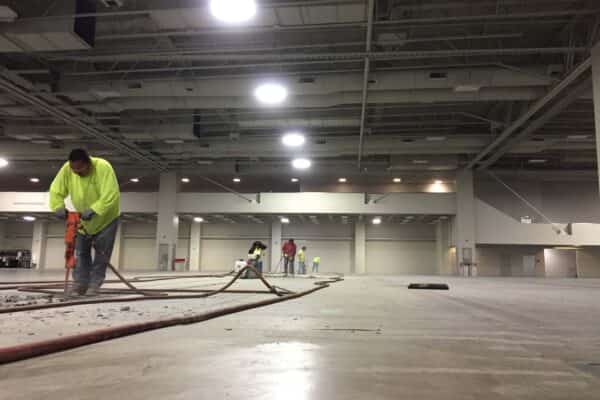
For most deteriorated concrete, engineered repair is dramatically cheaper than replacement — often a fraction of the cost — and it's faster and far less disruptive. You keep the structure in service, avoid demolition and disposal, and skip the long lead times of new construction.
Repair also has a strong sustainability story: the lowest-carbon structure is almost always the one that already exists. Restoring concrete avoids the embodied carbon of demolition, hauling, and new materials — an argument that matters more every year to institutional owners with ESG commitments.
- Lower first cost and lifecycle cost than replacement
- The structure stays in operation — minimal downtime
- Extends service life by decades when paired with protection
- Avoids demolition waste and new-material carbon
When replacement makes sense
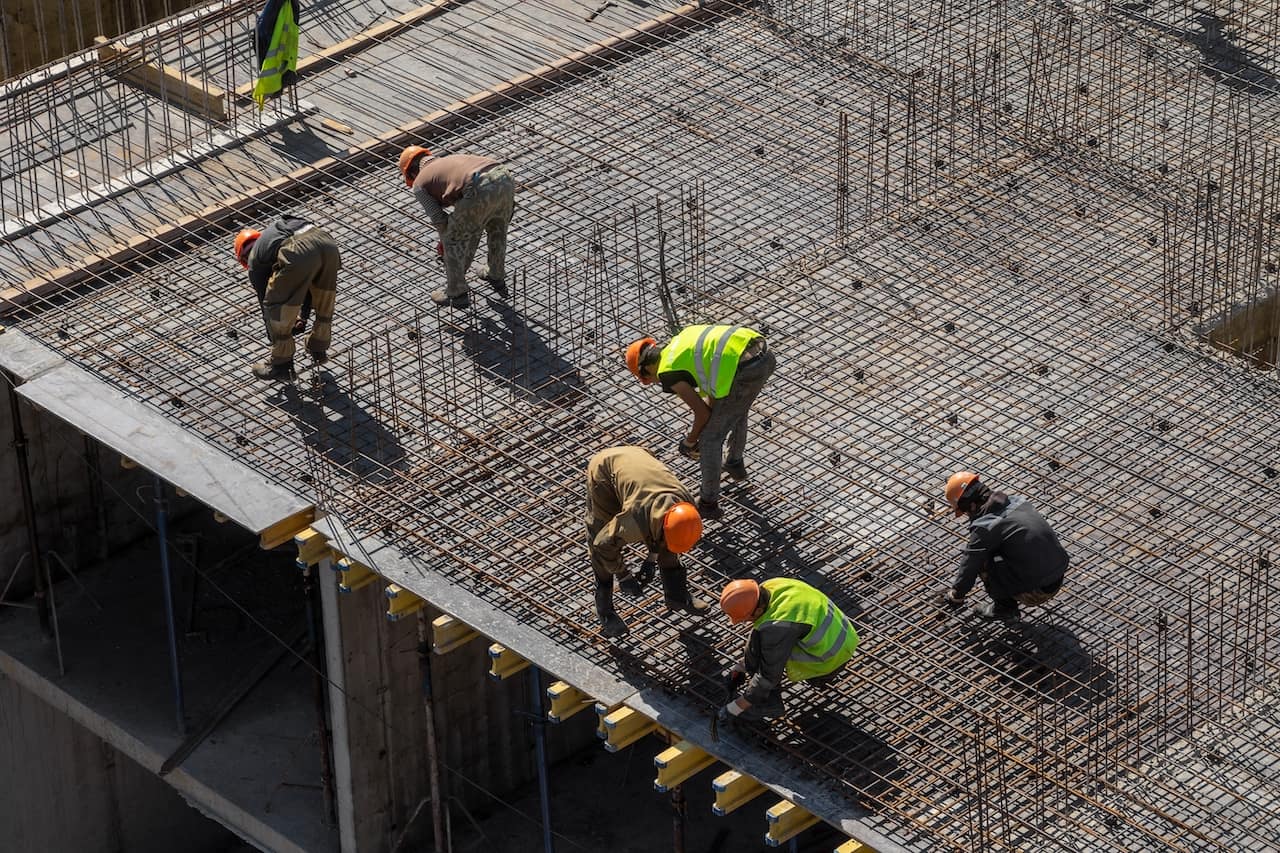
Replacement becomes the right call when the damage is beyond durable repair: widespread section loss, extensive reinforcing-steel corrosion, structural members that can no longer be brought back to capacity, or deterioration so advanced that a repair wouldn't last. In those cases, repeatedly patching a failing element costs more over time than replacing it once.
Sometimes the answer is a hybrid — replace the worst members, repair the rest, and protect everything so the deterioration doesn't come back.
How the decision actually gets made: the condition survey
You can't make this call from the ground with the naked eye. A proper condition survey looks below the surface:
- Sounding and delamination mapping (chain drag / hammer) to find voids where the surface is intact but the concrete beneath has separated
- Assessment of crack depth, width, and whether cracks are active (moving) or dormant
- Evaluation of reinforcing-steel corrosion and section loss
- Chloride and carbonation testing to gauge how aggressively corrosion will keep advancing
- Structural review by the engineer of record for anything load-bearing
The bottom line
In the large majority of cases we assess, structural concrete is a better candidate for repair and protection than for replacement — the trick is catching it before the reinforcing steel is too far gone. A condition survey turns the repair-vs-replace question from a guess into an engineering decision.